Explainer
What is social selling? A plain-English guide for B2B
Social selling means using social networks to find, understand and build relationships with buyers before you sell. What it is, how it works in B2B, and a 30-day plan to start.

The short answer
Social selling is using social networks, mainly LinkedIn in B2B, to find potential buyers, understand what they care about and build relationships with them, so that sales conversations start from trust instead of a cold pitch. In practice it means a credible profile, useful posts, thoughtful comments on buyers' posts, and messages that continue real conversations.
Buyers now research on their own long before they talk to a salesperson. They read posts, check profiles and ask their network. Social selling is how you become part of that research: the person they already know, trust and remember when the need arises.
Social selling, defined
Social selling is a way of selling, not a channel. It applies the oldest rule in sales, that people buy from people they know and trust, to the places professionals now spend time online. It covers four things:
- Your professional brand: a profile and posts that make it clear who you help and why you're credible.
- Finding the right people: identifying buyers and the influencers around them.
- Engaging with insight: adding something useful to the conversations they're already having.
- Building relationships: turning repeated, genuine interactions into trust and, eventually, business.
These are the same four pillars LinkedIn uses in its Social Selling Index (SSI), a score from 0 to 100 that you can check for your own profile.
Social selling versus cold outreach
Cold outreach starts with a request from a stranger. Social selling starts with value from someone familiar. The difference shows up in how people respond.
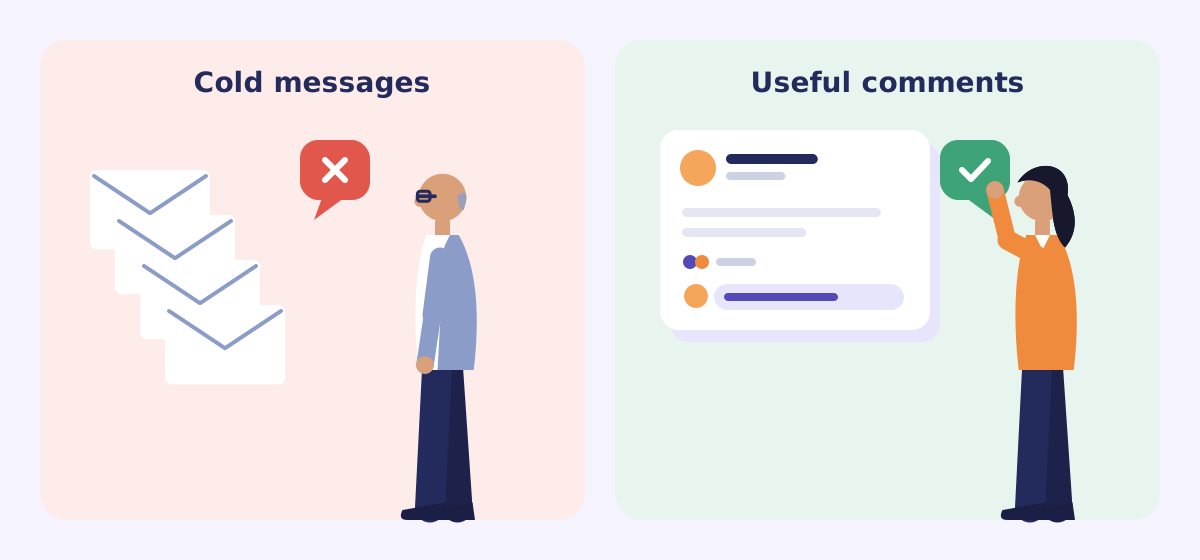
| Cold outreach | Social selling | |
|---|---|---|
| First touch | A message asking for time | A useful comment or post |
| How they see you | A stranger selling something | A peer who knows the topic |
| Who starts the sales conversation | You, before they're ready | Often them, when they're ready |
| What it builds over time | A list | A reputation |
What B2B social selling looks like day to day
- Reading before writing. Spending a few minutes a day on what your buyers are posting about.
- Commenting with substance. A specific point, an example, a good question. Never a pitch.
- Posting from experience. One or two posts a week that answer buyers' real questions.
- Connecting with context. Requests that refer to a conversation you've already had.
- Messaging like a person. Following the thread of their interests, and offering help before asking for a meeting.
The prospecting side of this, finding buyers and their conversations, is covered step by step in our LinkedIn prospecting guide.
How to start social selling in 30 days
| Week | Focus |
|---|---|
| Week 1 | Rewrite your headline and About section for one type of buyer. Write down the topics they post about. |
| Week 2 | Build a list of 30 to 50 buyers and follow them. Start leaving three useful comments a day. |
| Week 3 | Publish your first two posts answering questions buyers ask. Keep commenting daily. |
| Week 4 | Connect, with context, with people you've interacted with. Start conversations about their problems. |
How to measure social selling
Your SSI score is a useful health check, but it isn't revenue. Track the steps that lead to business: comments on buyers' posts, replies and profile views from buyers, conversations started, calls booked and deals that began on social. If the early numbers rise, the later ones follow.
Common social selling myths
- "It means going viral." No. A post seen by 300 of the right people beats one seen by 30,000 of the wrong ones.
- "It's just for salespeople." Founders, consultants, freelancers and marketers all sell. Often they're better at social selling, because they know the subject deeply.
- "You can automate it." Automated likes, comments and messages are the opposite of social selling, and they break LinkedIn's rules. Tools can save time finding conversations; the conversation itself has to be you. We compare the options in best LinkedIn prospecting tools, and explain why AI-written comments backfire.
Where Replydex fits
Replydex handles the most repetitive part of social selling: finding fresh posts on your buyers' topics across LinkedIn and Threads, and skipping the ones you've already joined. It opens each post with the comment box ready. The comment, and the relationship, stay yours.
Frequently asked questions
Is social selling the same as social media marketing?
No. Social media marketing promotes a brand to an audience. Social selling is individuals building one-to-one relationships with potential buyers, usually from their personal profiles.
Does social selling work in B2B?
It's where it works best. B2B purchases involve research, trust and relationships, and the decision-makers are active on LinkedIn.
What is a good Social Selling Index score?
LinkedIn's SSI runs from 0 to 100. Rather than chasing a number, watch whether it rises as you post, comment and connect more consistently.
How long does social selling take to work?
Usually a few weeks before buyers start to recognise you, and one to three months before it reliably produces conversations and calls.