Guide
How to get clients on LinkedIn without cold pitching
How to find and get clients on LinkedIn: set up your profile for one buyer, show up in their comments, post what you know, and turn relationships into calls.

The short answer
To get clients on LinkedIn, make your profile speak to one kind of buyer, find the people who match it, and become familiar to them by leaving useful comments on their posts. Post about the problems you solve once or twice a week. When someone engages, connect, carry on the conversation in messages and suggest a call only when there's a clear reason. It's slower than cold outreach for the first few weeks, and much faster after that.
Freelancers, consultants and small agencies win most of their best clients through relationships. LinkedIn lets you build those relationships with people you haven't met yet, at a scale no networking event can match. Here's how to do it in a way that feels natural, and that buyers actually respond to.
1. Set up your profile for one buyer
Every comment you leave sends people to your profile. In the few seconds they spend there, it should answer: who do you help, with what, and can you prove it?
- Headline: name the buyer and the outcome. "I help B2B software companies turn organic search into demo requests" beats "Digital marketing professional".
- About section: start with the problem your client has, then how you solve it, then proof. You have 2,600 characters, but the first two lines do most of the work.
- Featured: pin a case study, a useful post or a simple page explaining how to work with you.
- Photo and banner: a clear photo of you, and a banner that repeats who you help.
2. Find the people you want as clients
Write a one-line description of your ideal client, then use LinkedIn search to find 30 to 50 real people who match it. Follow them. The goal isn't a huge list. It's a group small enough that they'll start to recognise your name.
Then think about what they post about. A founder rarely posts "I need a copywriter". They post about a launch, a hiring struggle, a disappointing campaign. Those topics are your way in.
3. Show up in their comments
This is the step most people skip, and the one that makes everything else work. When you leave a thoughtful comment on someone's post:
- the author notices you, often replies, and frequently checks your profile;
- their audience, often full of similar buyers, sees you being useful;
- you start a relationship without asking for anything.
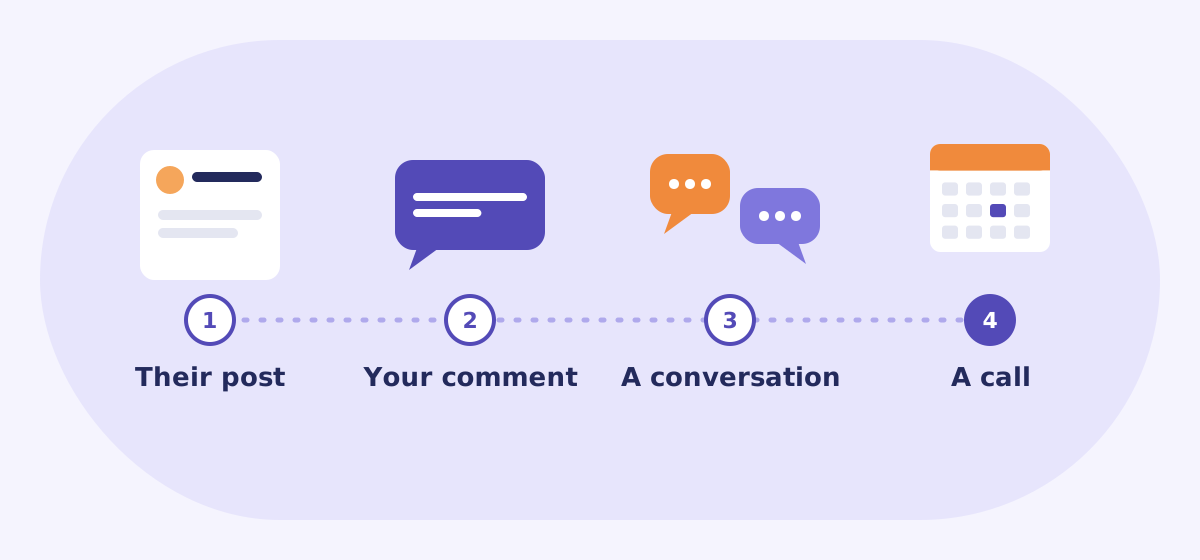
Comment within the first few hours of a post when you can, because early comments get seen most. Be specific, add your own experience, and never pitch. Three to five good comments a day is enough. Our LinkedIn prospecting guide has a full daily routine.
4. Post what you know
Comments make people curious; posts give them something to find when they look you up. Once or twice a week, post something that helps your ideal client:
- answer a question clients ask you on calls;
- share a lesson from real work, with numbers if you can share them;
- explain a common mistake and how to avoid it;
- give a clear opinion on something in your industry.
Write for one reader. Posts that try to appeal to everyone end up memorable to no one.
5. Move from comments to conversations
After a few exchanges in the comments, send a connection request with a note that refers to them: "Really enjoyed your take on agency pricing. Would be good to stay in touch." Once connected, keep talking about their world, not your services. Ask how the launch went. Share an article that relates to something they posted.
When they mention a problem you solve, that's your opening. Offer something small and useful first: a quick look at their landing page, a short video with three suggestions, or an introduction to someone who can help.
6. Suggest a call when there's a reason
A call should feel like the obvious next step, not a trap. "Happy to walk you through what we changed for a similar client, if that's useful? 20 minutes would do it." If they say not now, keep commenting. Timing changes, and you'll be the person they think of.
7. Keep track, lightly
A simple spreadsheet or free CRM is enough: name, company, how you met, last touch and next step. Review it weekly. Most lost clients aren't lost to a competitor. They're lost because nobody followed up.
Mistakes that cost you clients
- The connect-then-pitch. A sales message straight after a connection request is the fastest way to be ignored or reported.
- Automation tools. Bulk messages and automated comments break LinkedIn's rules and damage the trust you're trying to build. See our comparison of LinkedIn prospecting tools.
- Hiding what you do. If your profile doesn't say who you help, your comments create attention that goes nowhere.
- Giving up in week three. The first month builds familiarity. Clients tend to arrive after that.
The fastest way to find posts worth commenting on
Finding fresh, relevant posts every day is the part that takes time. Replydex is a free Chrome extension that searches LinkedIn and Threads for your saved topics, skips anything you've already commented on, and lines up the best posts with the comment box ready. You write every comment yourself.
Frequently asked questions
Do I need LinkedIn Premium to get clients?
No. Everything in this guide works on a free account. Premium and Sales Navigator add more search filters and InMail, which some people find useful later.
How long does it take to get a client from LinkedIn?
It varies by industry and deal size. Most people see conversations within a few weeks of consistent commenting and posting, and first clients after one to three months.
Is it OK to message someone after one comment?
You can, but it works better after two or three interactions, when they recognise your name. Make the message about them, not your offer.
Should I post every day?
Not unless you enjoy it. One or two useful posts a week, plus daily comments, is a sustainable rhythm that works for most consultants and freelancers.